Set the baseline
Choose the business, service keyword and search area that matter to your customers.
 Gloo LocalStart Free
High-Intent SEO Solution
Are competitors becoming more visible around your business? Google Maps rank tracking compares the same keyword across a defined search area, showing changes that a single ranking number can miss. Use Gloo Local reports to investigate where your visibility is strong and where it needs attention.
Choose the business, service keyword and search area that matter to your customers.
Inspect which businesses appear across the grid rather than assuming every competitor serves the same area.
Keep grid settings consistent and compare equivalent scans before claiming an improvement.
Investigate profile accuracy, customer reviews and relevant local content. A scan measures visibility; it does not change rankings by itself.
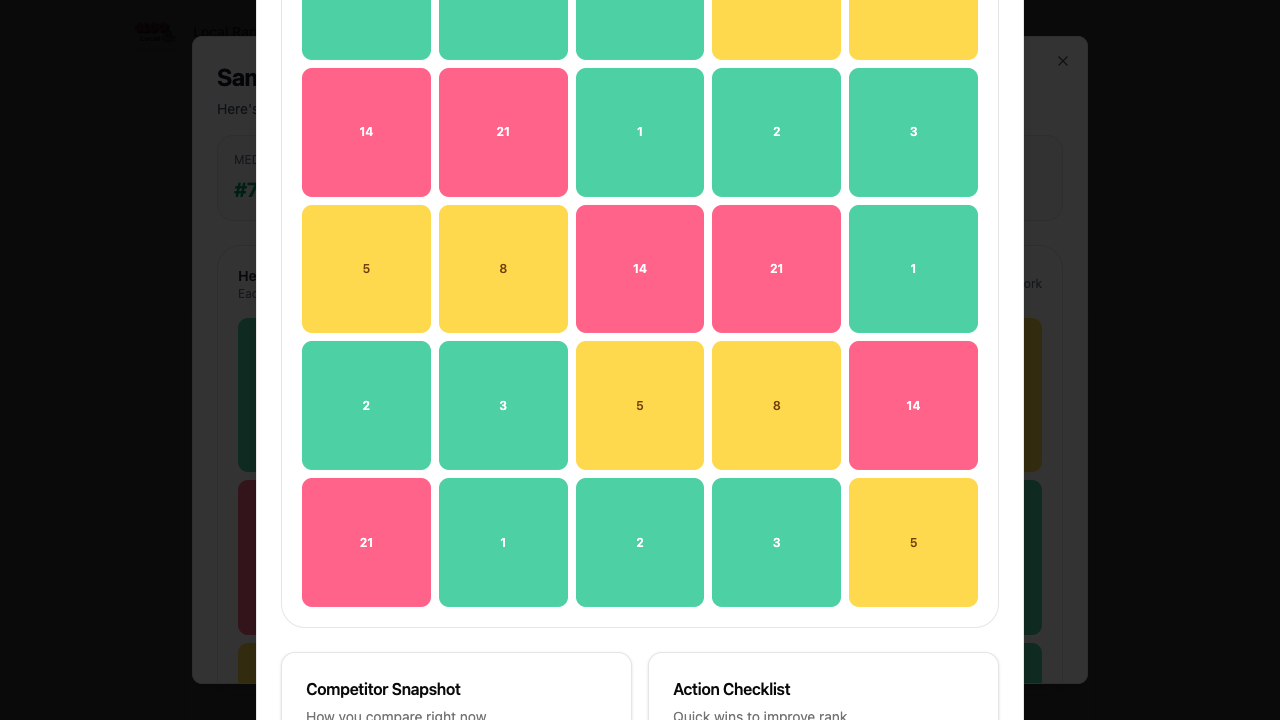
Maps positions are observations for a keyword, place and time, not a guarantee of what every customer will see.
Sources: Google: how local rankings work
Google Maps rank tracking software measures local pack position by keyword and location over time, alerts teams to drops, and connects ranking shifts to profile and review actions. It replaces manual spot-checks with portfolio-level visibility for multi-location brands.
Google visibility intelligence
Gloo Local turns repeatable geo-grid scans into historical coverage, competitor movement and prioritised actions for one location or an entire portfolio.
Keep keyword, radius and grid configuration comparable so gains, losses, new coverage and disappeared coverage remain visible.
See which competitors appear most often and which services, products or neighbourhoods create their advantage.
Find the branches losing visibility without stripping away the local evidence needed to respond.
Move the finding into profile work, reviews, Instagram, an SEO page or an Agent Center task.
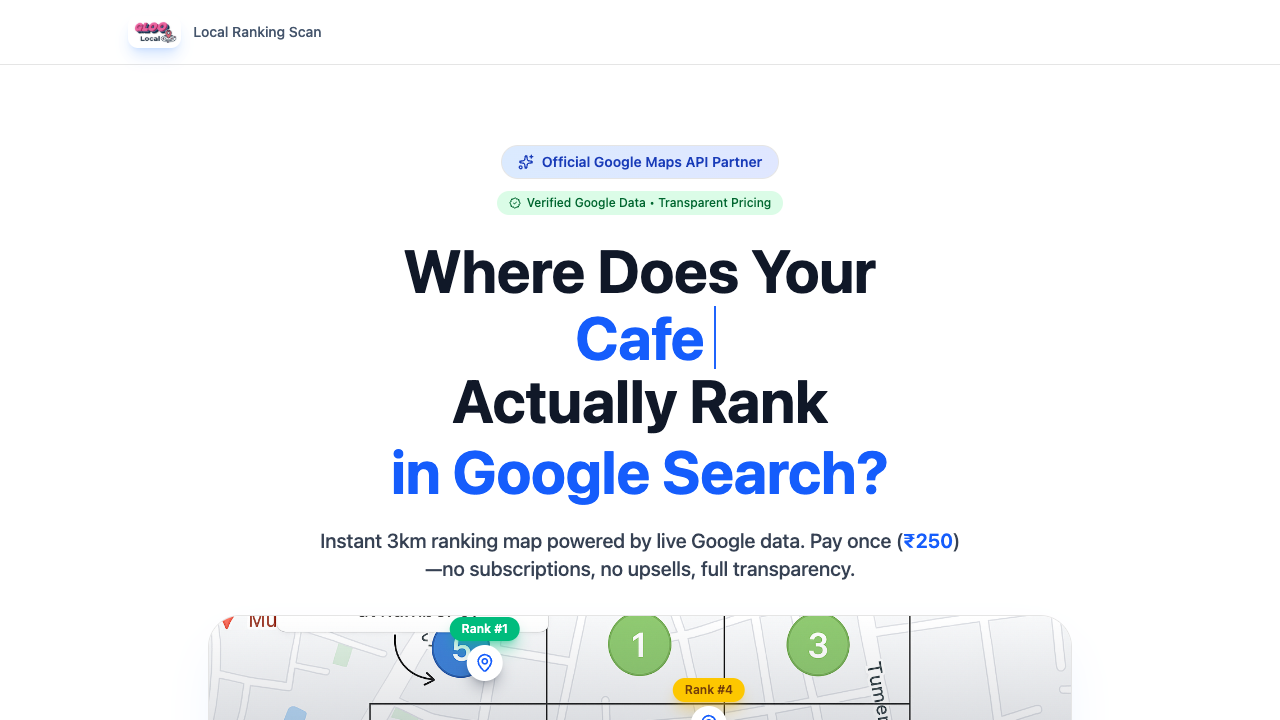
Track map pack movement weekly. Use the free ranking checker for triage or Gloo Local for ongoing multi-location tracking.
Explore related workflows: Google Business Profile management software, local rank tracker, local reputation management software, local SEO reporting dashboards.
Need buyer-side validation? See best rank trackers, ranking factors, and tracking guide.
Run local SEO actions from one operational workflow rather than disconnected tools.
Track ranking, review, and profile outcomes by location and region.
Use structured local content for SEO, AEO, and GEO discovery channels.
Increase Google Maps and local search presence where intent is highest.
Strengthen reputation signals through faster, better review operations.
Keep profile content fresh so search traffic converts into calls and bookings.
Yes. Workflows are designed for portfolio-level control with location-level execution.
Yes. These pages and workflows are structured for SEO + AEO + GEO discovery patterns.
Explore connected high-intent local SEO workflows for GBP, rankings, reporting, and reputation growth.
Teams often chase rank changes that do not move revenue. A better approach is to segment keywords into high-buy-intent and low-buy-intent groups, then prioritize map pack lift where calls and direction requests are historically strongest.
Google Maps ranking improvements compound when tied to operational inputs: profile completeness, review velocity, response timeliness, and posting cadence. Rank tracking without action workflows gives awareness, but not outcomes.
Map priority keywords to service-line revenue.
Escalate any location with sustained top-10 decline for 2+ weeks.
Pair rank movement with profile actions to detect true commercial lift.
Google Maps Ranking Software helps local growth teams improve visibility, reputation, and conversion using one autonomous local operations stack.
Topic cluster · Google Maps rankings
What affects Google Maps ranking for local businesses?
Google Maps rank tracking questions
Search teams ask about the “best” tracker in different ways. The useful answer depends on whether one business needs a quick check or a multi-location team needs repeatable measurement, history, and action ownership.
The best tracker is the one that measures the keywords and geographic areas that matter to each location, preserves ranking history, and makes drops actionable. Multi-location teams should also require portfolio views, location comparison, and a weekly workflow for assigning profile, content, and review fixes.
A tracker checks where a Google Business Profile appears for selected searches from defined geographic points. Repeating the same checks over time shows whether visibility changed by keyword, neighborhood, and location instead of relying on a personalized manual search.
Give every location an owned keyword set, measure from consistent geographic points, and review ranking coverage with profile health and review activity. Portfolio rollups should identify which locations lost meaningful coverage and which action owner is responsible for the next fix.
Look for location groups, permissions, historical comparisons, scheduled reporting, exportable evidence, and links from ranking changes to the operating work that may improve them. A dashboard without ownership and follow-through is only a reporting layer.
Connected execution
Gloo Local turns ranking movement into governed profile, review, content, website and location actions, then measures the next comparable cycle.
Track geo-grid coverage, competitor movement and the keyword-location combinations that matter.
Keep categories, services, media, posts and connected business information accurate and active.
Give each branch local intelligence while central teams retain standards and exception control.
See how visibility, reviews, Instagram, GBP and website work become one recurring cycle.
Evidence and editorial standards
Reviewed by the Gloo Local Product & Research Team on September 11, 2026. Product statements describe connected Gloo Local workflows. External facts are linked to their sources. Illustrative operating examples are not represented as measured customer outcomes.
Use your real business data
Continue securely in Gloo Local with your location, keywords, competitors, reviews and approved business sources.