Maps coverage
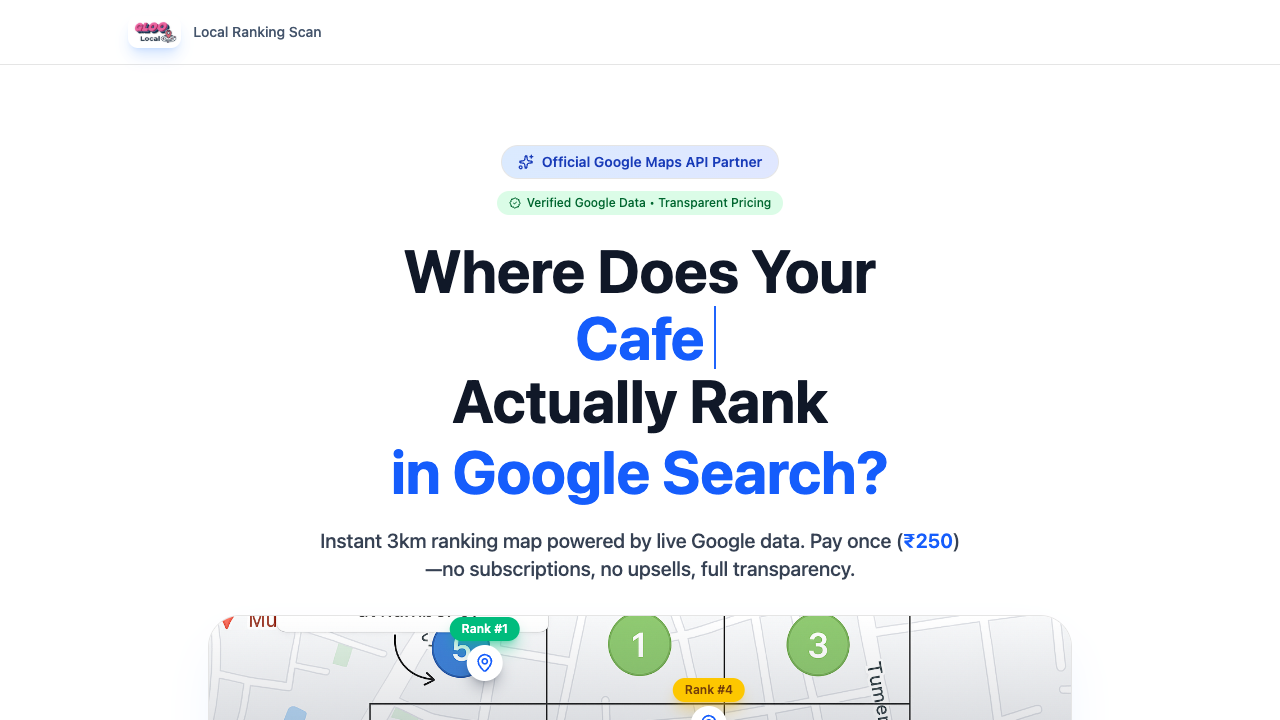
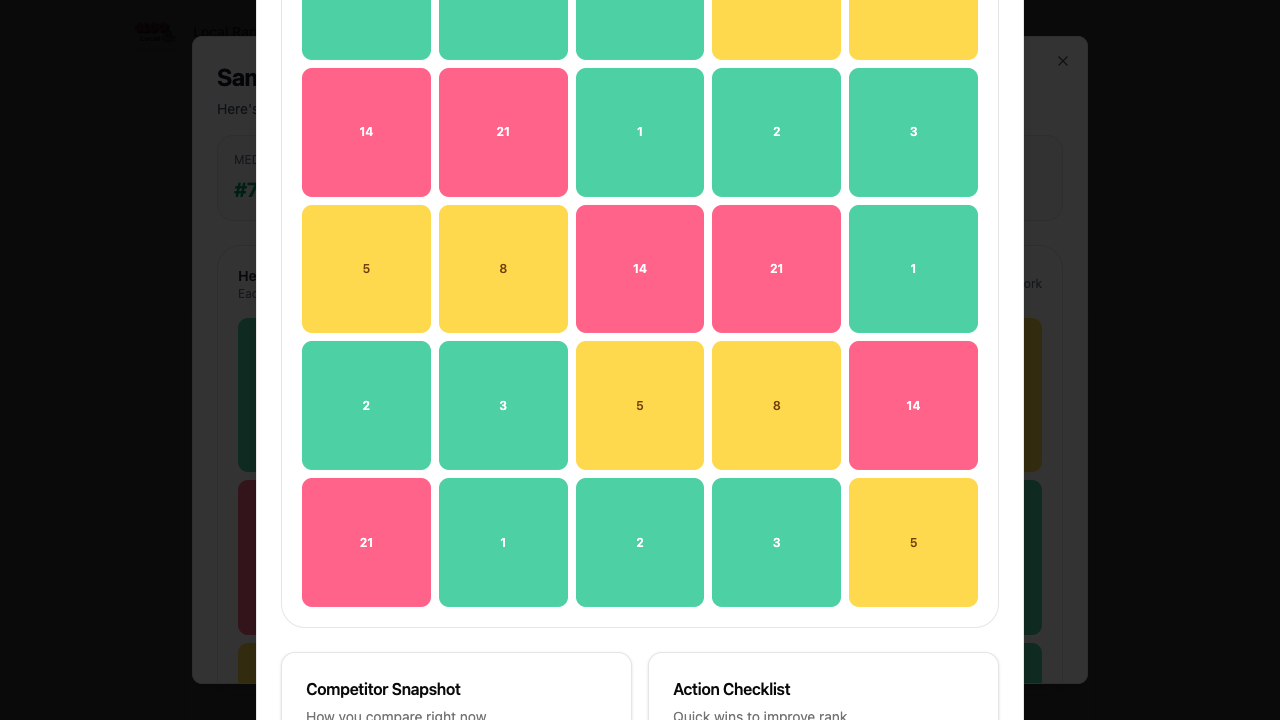
Report the share of comparable grid points ranking in positions 1-3, 4-10, 11-20 and missing for the same keyword, radius and observation pattern.
 Gloo LocalRun a scan
Evidence-backed report · Updated August 30, 2026
A practical reference for Google Maps visibility, reviews, profile quality, and execution. Industry evidence is separated from Gloo Local operating recommendations so targets stay useful without pretending every market behaves the same.
It should define a repeatable measurement, show the external evidence behind it, and identify the next action. It should not promise one universal ranking threshold across every industry, city, or business model.
Gloo Local Research
A benchmark is useful only when the market, sample, period and calculation are explicit. Gloo Local keeps ranking coverage, review operations, profile freshness and customer actions separate before interpreting the combined picture.
Report the share of comparable grid points ranking in positions 1-3, 4-10, 11-20 and missing for the same keyword, radius and observation pattern.
Separate rating, review velocity, response coverage, response time and recurring themes. Do not use one portfolio average to hide location outliers.
Track whether core facts, services, media and posts are current, attributable and appropriate for the location.
Read calls, directions, website visits, enquiries or bookings beside visibility. A ranking gain without a useful next action is incomplete.
What the evidence supports
Industry evidence: Google says local results are primarily based on relevance, distance, and prominence.
Gloo operating target: Keep categories, services, address, hours, and core business information complete and accurate.
Industry evidence: BrightLocal's 2026 consumer research reports that 97% of consumers use reviews when making purchase decisions.
Gloo operating target: Monitor review recency, rating distribution, response coverage, and unresolved negative themes weekly.
Industry evidence: Local results vary by searcher location, making a single manual search an unreliable benchmark.
Gloo operating target: Repeat the same keyword, grid, radius, and business target before comparing movement.
Industry evidence: Google's AI-search guidance prioritizes useful, original, first-hand content rather than special AEO or GEO tricks.
Gloo operating target: Publish real examples, images, decisions, and local expertise instead of commodity summaries.
These are Gloo Local workflow recommendations, not claims about universal Google ranking thresholds.
| Metric | How to measure | Recommended operating standard |
|---|---|---|
| Maps visibility | Top-3, top-10, and unranked grid-point share for a stable keyword set | Measure on a fixed cadence and investigate material directional gaps |
| Profile accuracy | Required GBP fields, hours, categories, services, links, and status | No known critical inaccuracies; assign every exception |
| Review health | Recency, rating distribution, response coverage, and recurring themes | Use an owned response SLA appropriate to the team and market |
| Competitor pressure | Businesses appearing above you across the same grid | Track persistent competitors, not one-off appearances |
| Execution | Priority actions completed and remeasured | Close the loop between finding, owner, action, and next scan |
Method and sources
Gloo Local reviewed official Google guidance and major 2026 local-search research. Survey findings are presented as survey findings, while Gloo operating targets are explicitly labeled recommendations.
Measure your own market
Gloo Local checks a keyword from multiple points around the business, labels every rank, identifies recurring competitors, and ties the report to the location you operate.
Topic cluster · Local SEO reporting
What metrics should multi-location brands report every week?
Local SEO benchmark questions
Benchmarks are most useful when they define a consistent measurement method and reveal which locations need investigation. They should not be treated as universal promises across industries and markets.
Choose a stable set of local queries and search areas, compare Maps visibility and reputation signals with relevant competitors, and repeat the measurement consistently. Segment by market and business type so the comparison reflects the environment each location actually faces.
Useful benchmarks include local ranking coverage, profile completeness, review response SLA, review velocity, content freshness, conversion actions, and the percentage of locations meeting operational standards. Report both portfolio distributions and location exceptions.
Track visibility, trust, execution, and conversion together: Maps and organic coverage, review health, profile and content freshness, completed priority actions, calls, directions, website visits, and qualified outcomes. No single score can explain local performance on its own.
Evidence and editorial standards
Reviewed by the Gloo Local Product & Research Team on September 11, 2026. Product statements describe connected Gloo Local workflows. External facts are linked to their sources. Illustrative operating examples are not represented as measured customer outcomes.
Use your real business data
Continue securely in Gloo Local with your location, keywords, competitors, reviews and approved business sources.